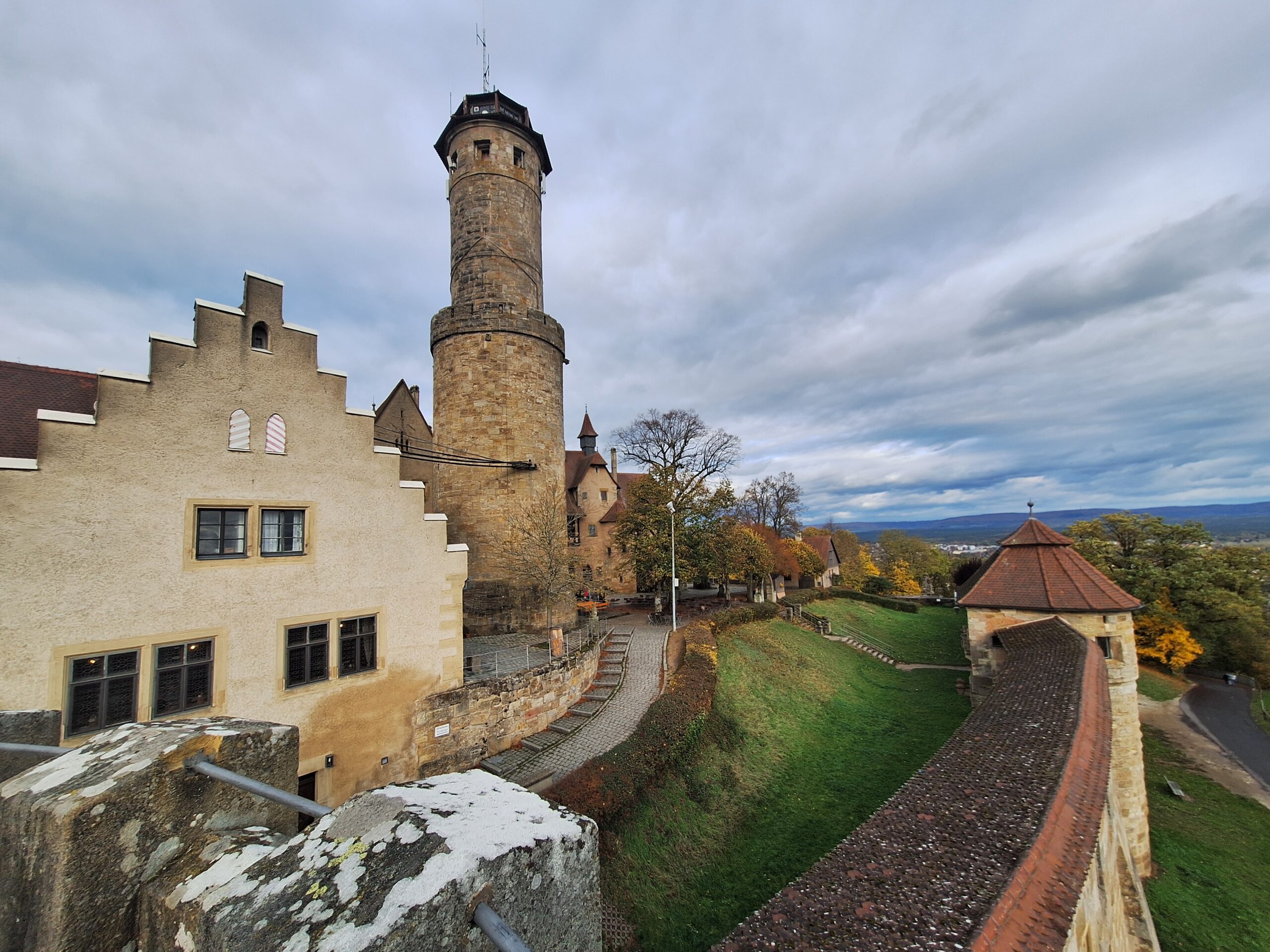
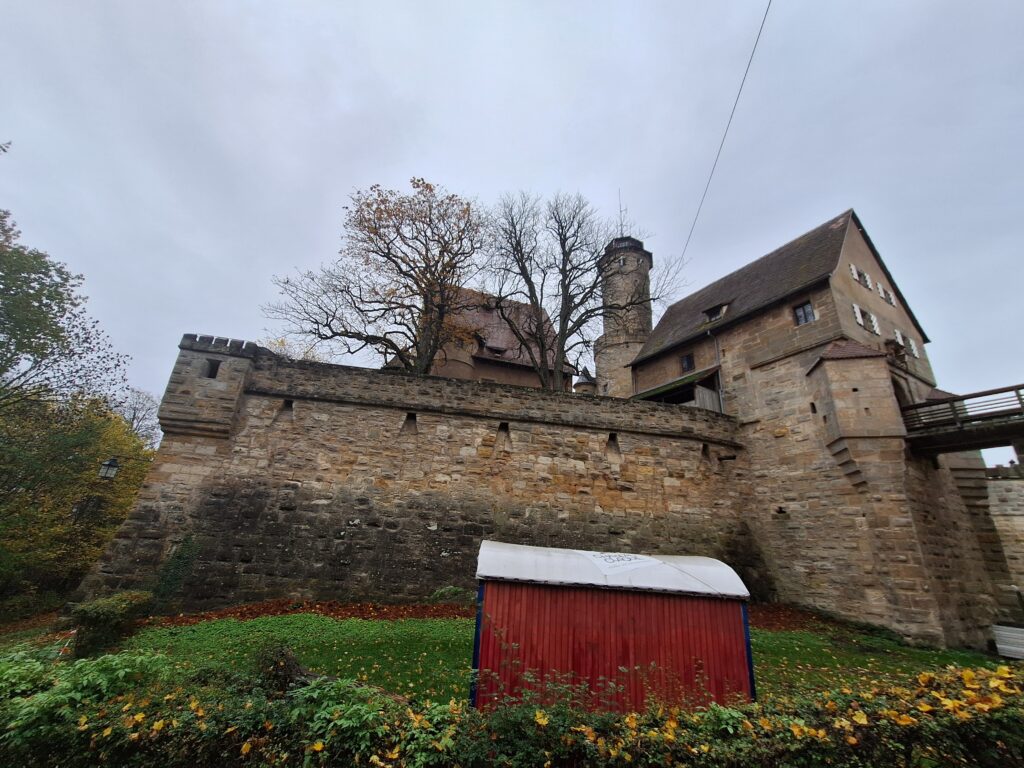
Is there anything cooler than a medieval castle? Emphatically, no, except for maybe some medieval manuscripts. Our first trip to Bamberg was in October of 2025, right as the leaves were turning and everyone wants to paradoxically be inside and outside at the same time. I did not know this at the time, but I ended up returning to Bamberg repeatedly. On this particular day, we caught whatever RE (regional) train crosses through Fürth towards Bamberg, as taking the U-Bahn to Fürth from our Gostenhof apartment and catching the RE trains there was almost always less total travel time than doubling back to the Nuremberg Hauptbahnhof– something Google Maps will not tell you. Our intention was to see the castle (Altenburg) because I did not at this point know about the Bamberger Domschatz. More on this in another post.
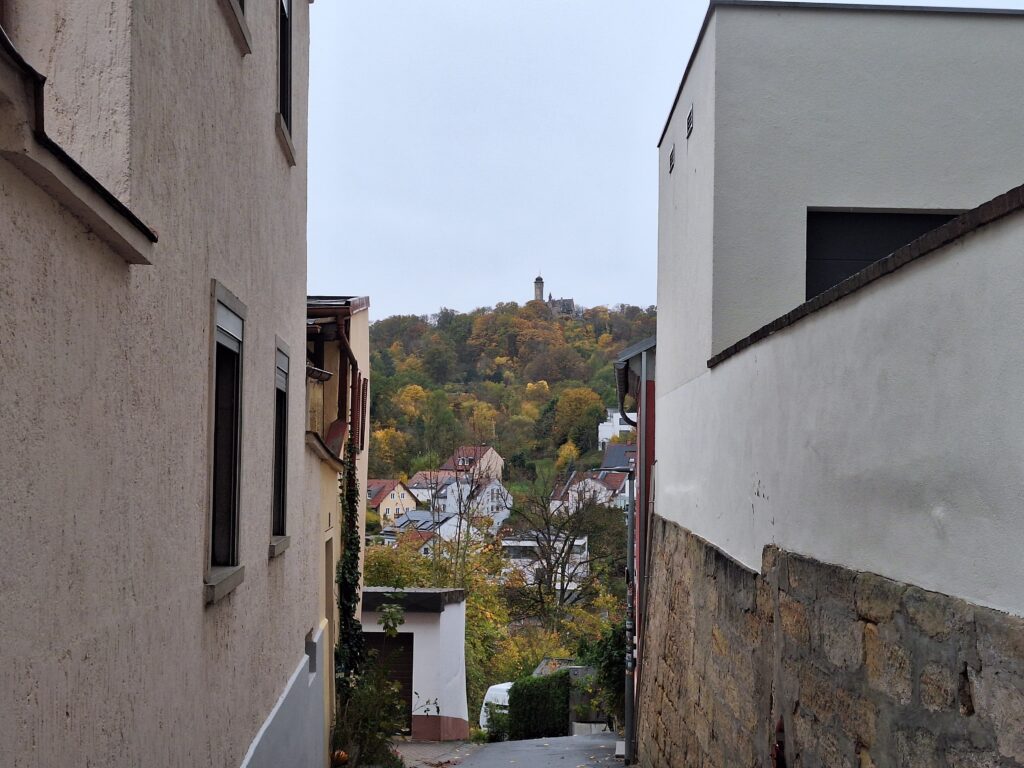
Germany is simultaneously car-dependent in some areas, and has great public transit in others. We’ve noticed that pretty consistently, the castles and palaces are hard to get to on transit. We ended up not doing any of the most important ones because they are 90 minutes one way on a bus that leaves every two hours… unless you have a car, which we do not at this time. As it were, the Bamberg Castle is a bit more accessible in that we could take a bus to a particular stop wherever I took this picture, and then walk about a mile and a half to get to the main stairs. You can see the castle in the distance on the hill… this is at 2x zoom.
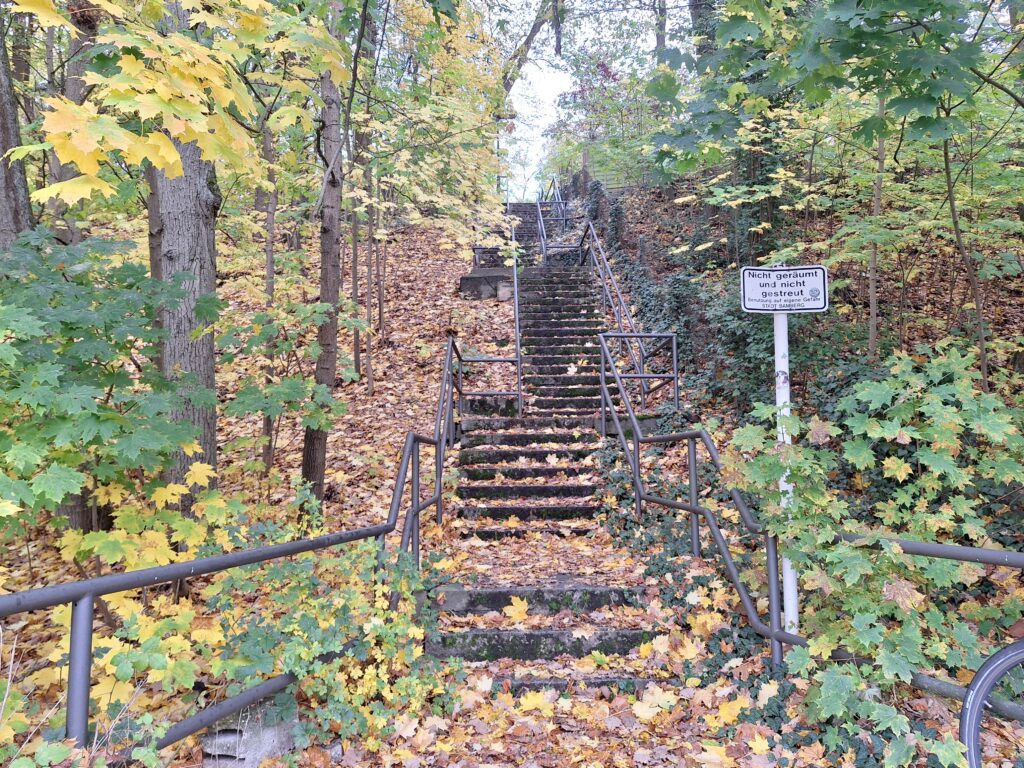
This is the stairwell… fairly well-known, from what I understand. I do not recall how far it is from this entrance of sorts (which was already a hike from the bus stop) up to the castle, but it was a decent hike. Also somewhat of a safety hazard with the leaves in the way. Still! Well worth it for the views, and the pictures came out really well, in my opinion.
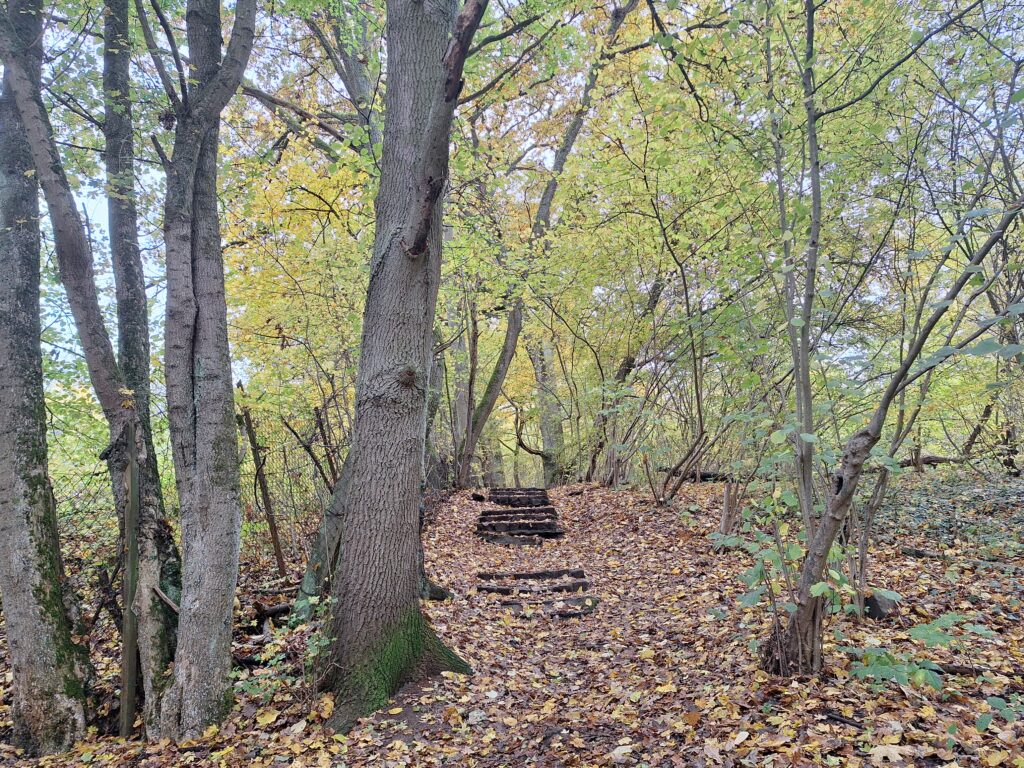
Lest we deceive anyone, it was not all strictly vertical all the time, and it was an absolutely beautiful walk.
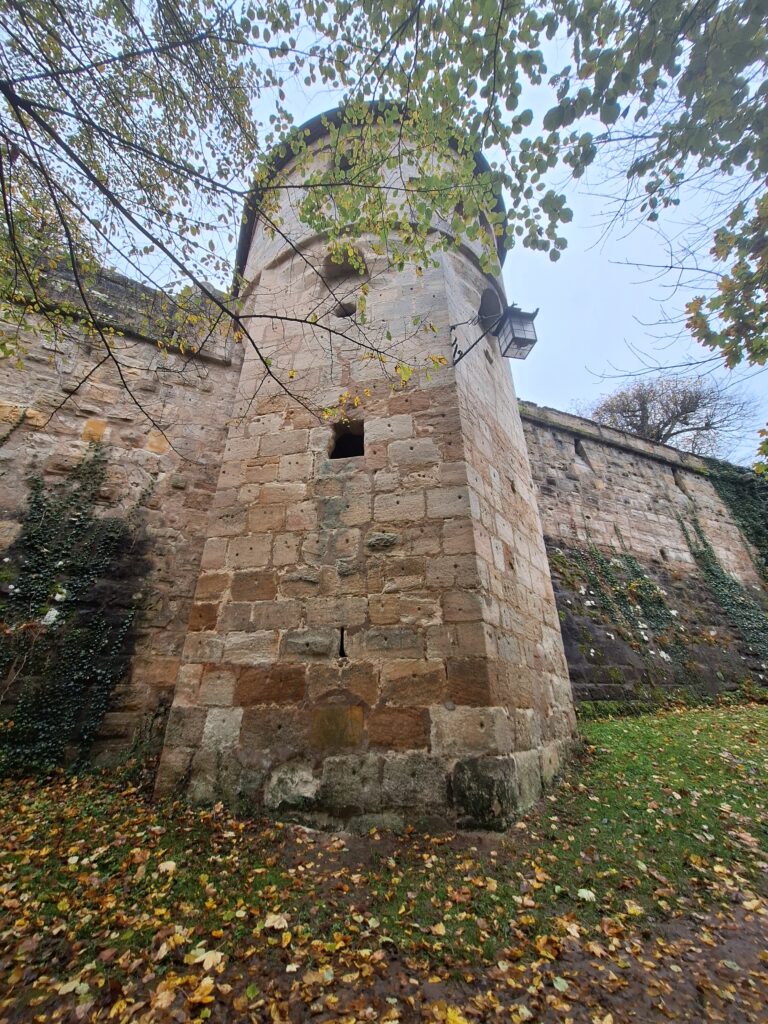
The stairwell does not, as it were, come out at the main portcullis– instead, our first up-close view was outside at the base of a tower. It really gives a sense of how impregnable these things were intended to be in the medieval period.
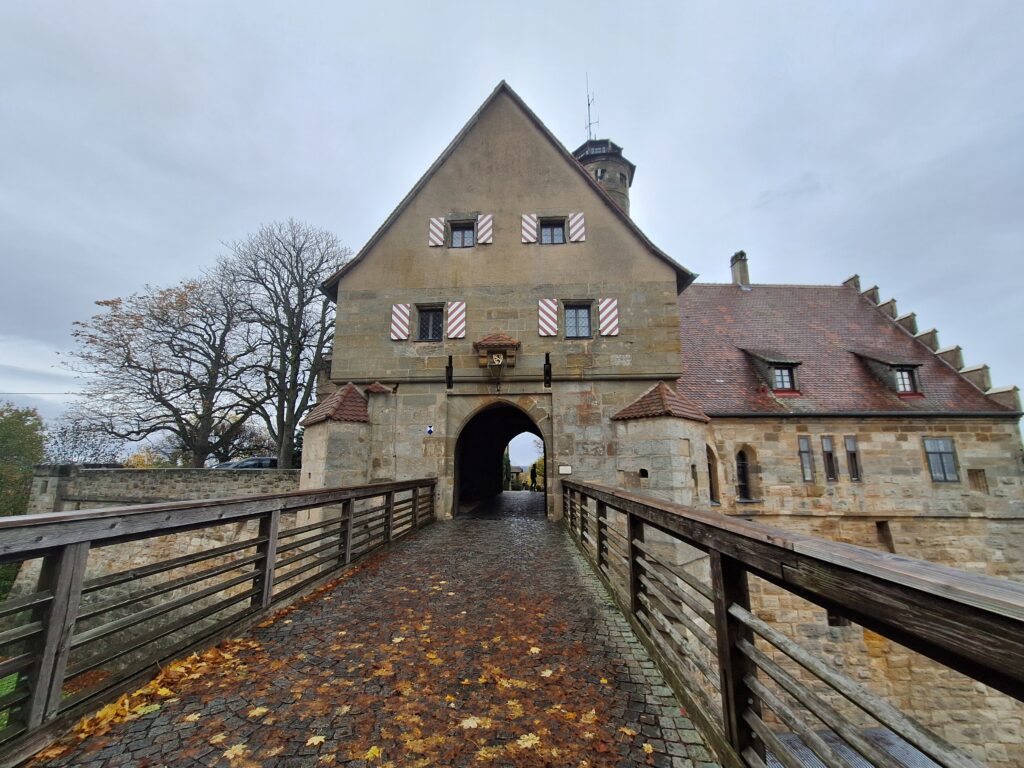
The main gate appears to my period eye to have been reconstructed. This is fairly common– after so many social upheavals, including of course World War II, a lot of pre-war architecture was leveled and had to be rebuilt. The twist here, however, is that Bamberg largely escaped the worst of World War II. What wrecked the Altenburg was 1553, when Albert Alcibiades of Brandenburg-Kulmbach burned it during the Second Margrave War. Afterwards it served as a prison, and in 1801, the Bamberg physician Adalbert Friedrich Marcus bought the decaying castle and restored it from the ground up. This is one of those fascinating Romantic era reconstructions.
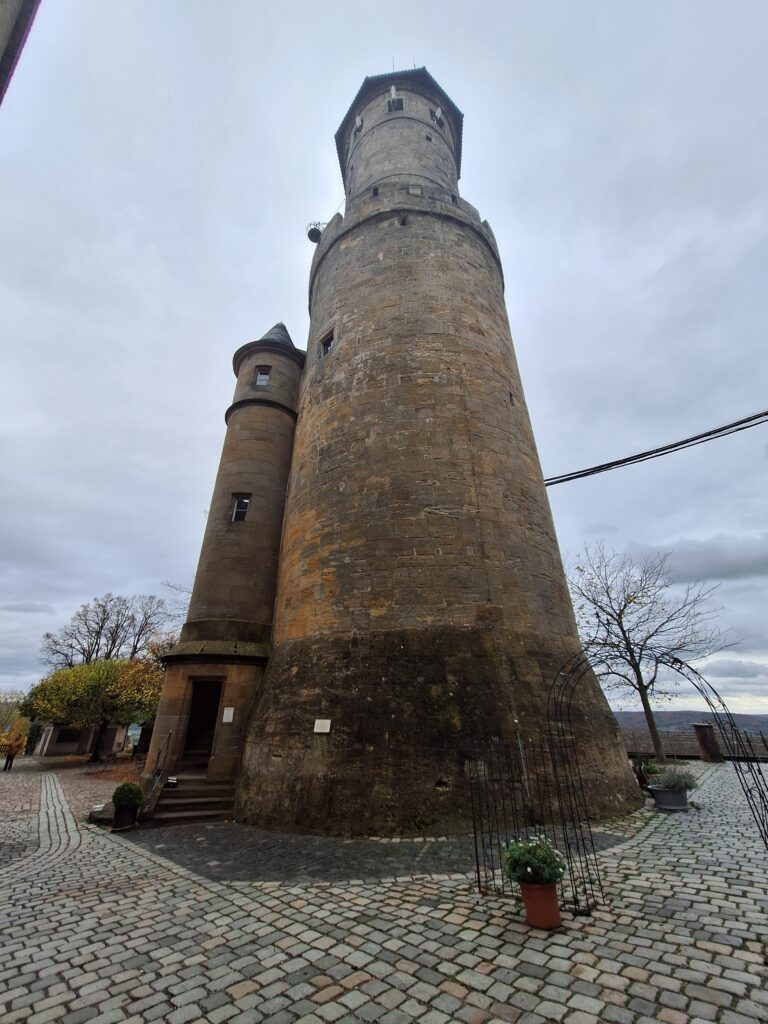
Everyone loves a good medieval tower, the main medieval structure in the complex. We paid 2 euros apiece to climb this thing.
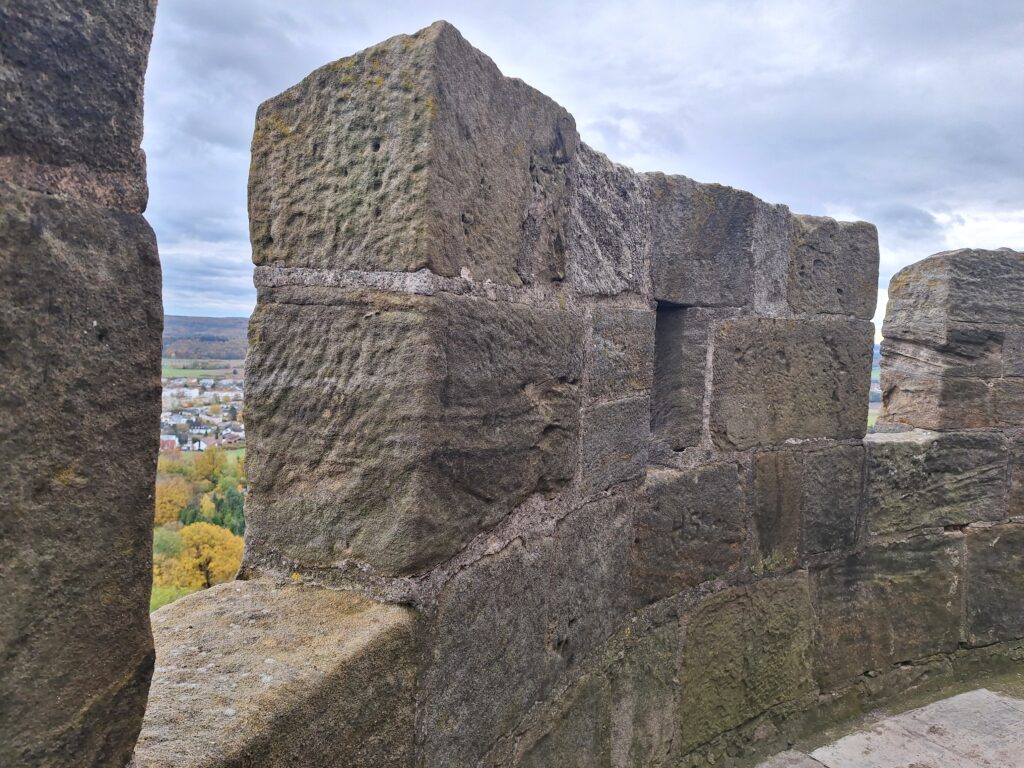
My first proper crenellations made it worth it.
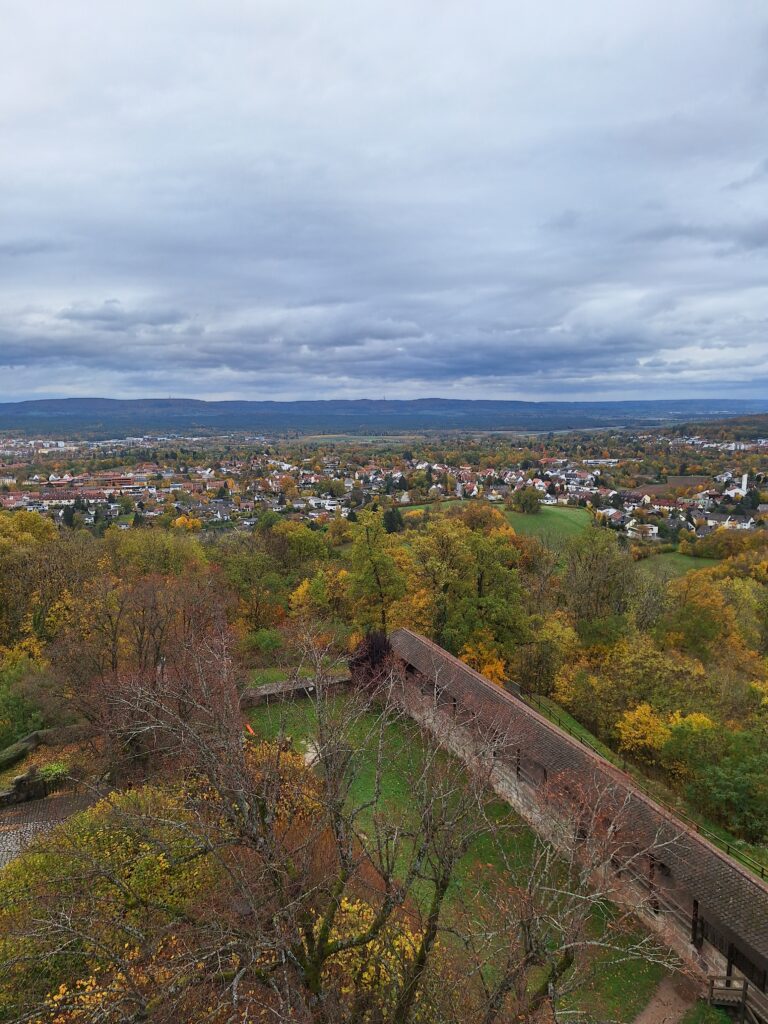
I’m told that the Altenburg is built on the tallest hill in Bamberg, and this photo was taken at the top of the tower. The defense ramifications are immediately obvious.
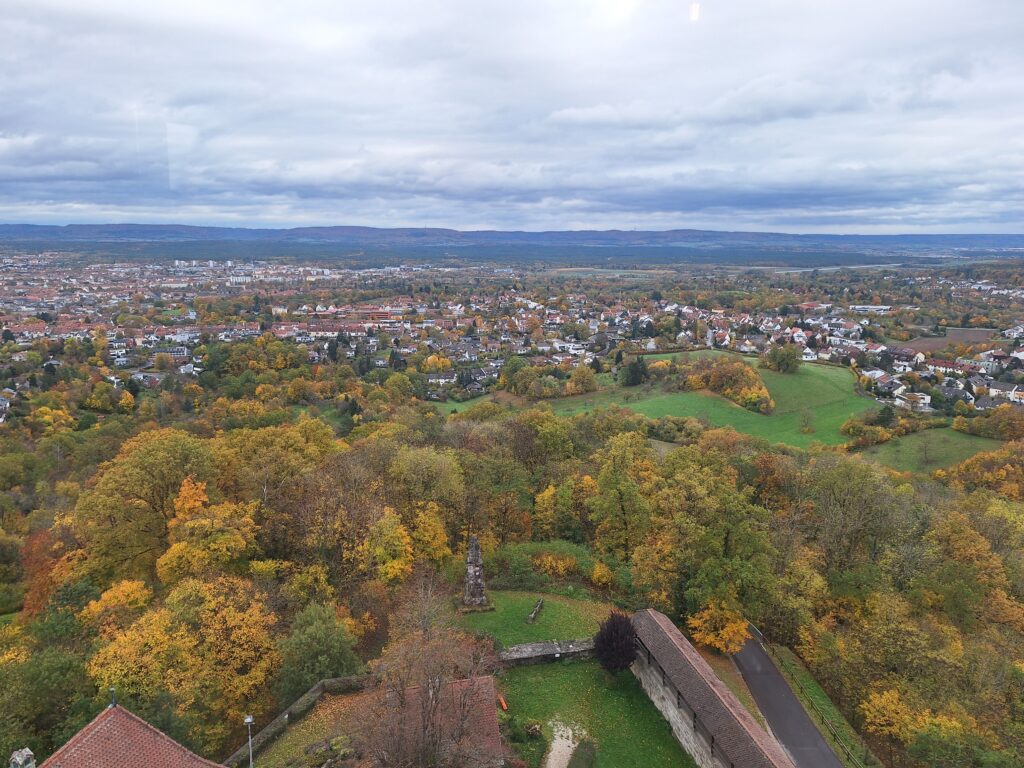
This is true on all sides, of course.
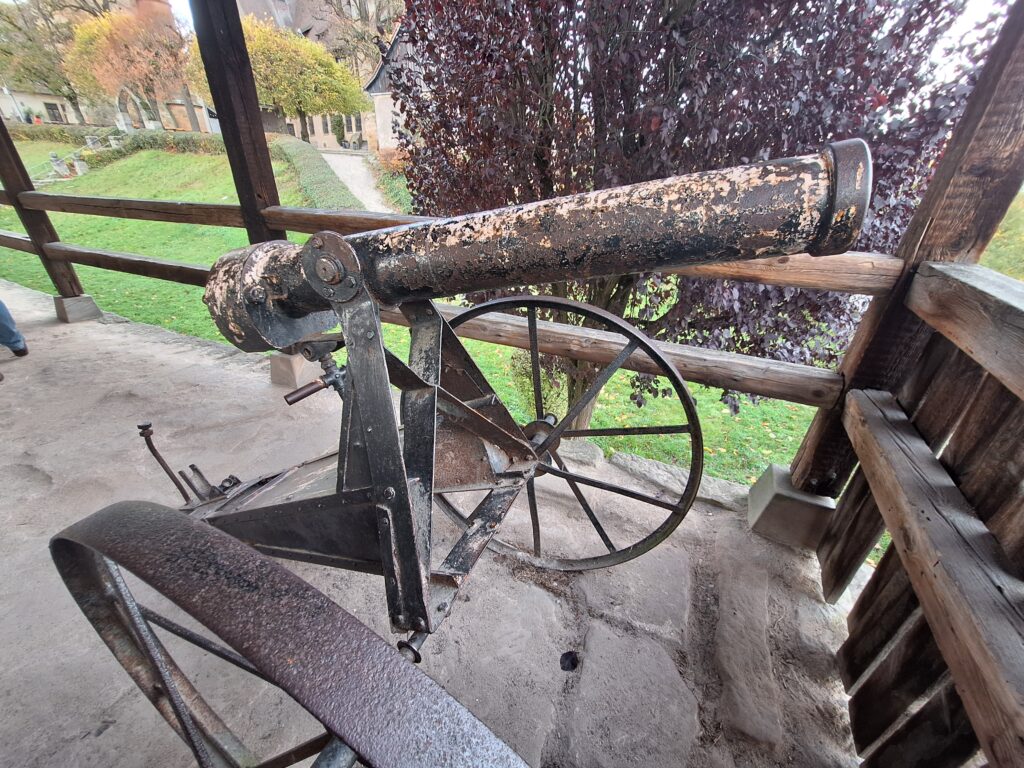
An aspect of older works of European architecture is that they have very, very long lives. This particular castle was in use well past the Middle Ages, evidenced here by the position of cannons that were used in the aforementioned Early Modern regional dispute.
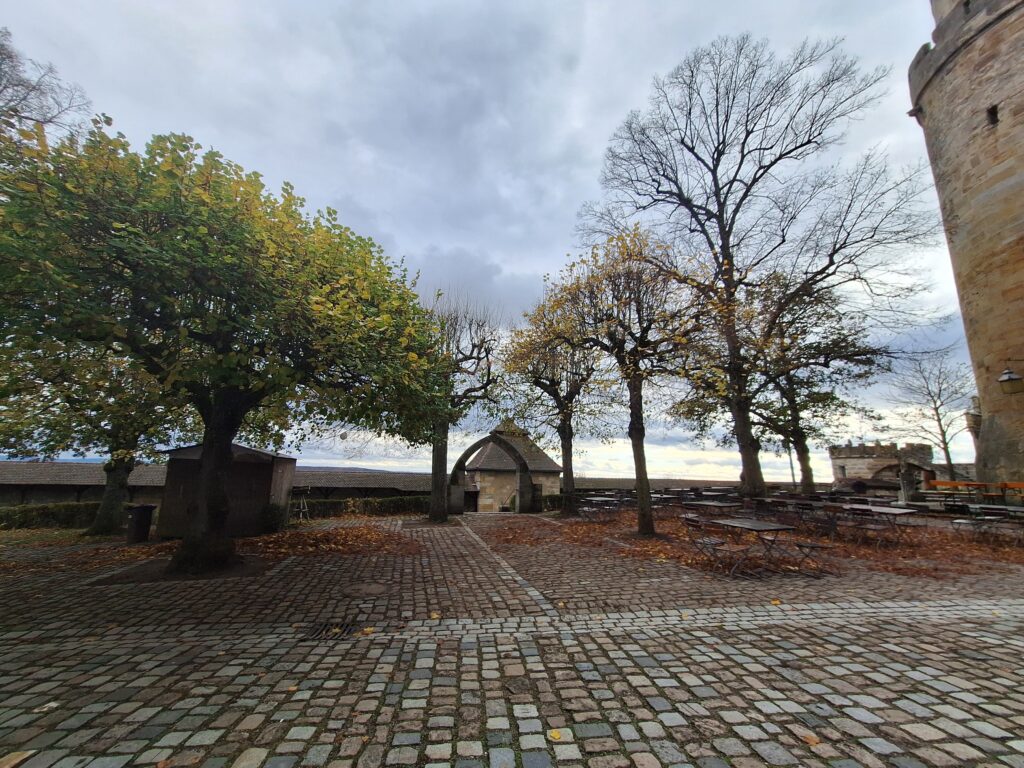
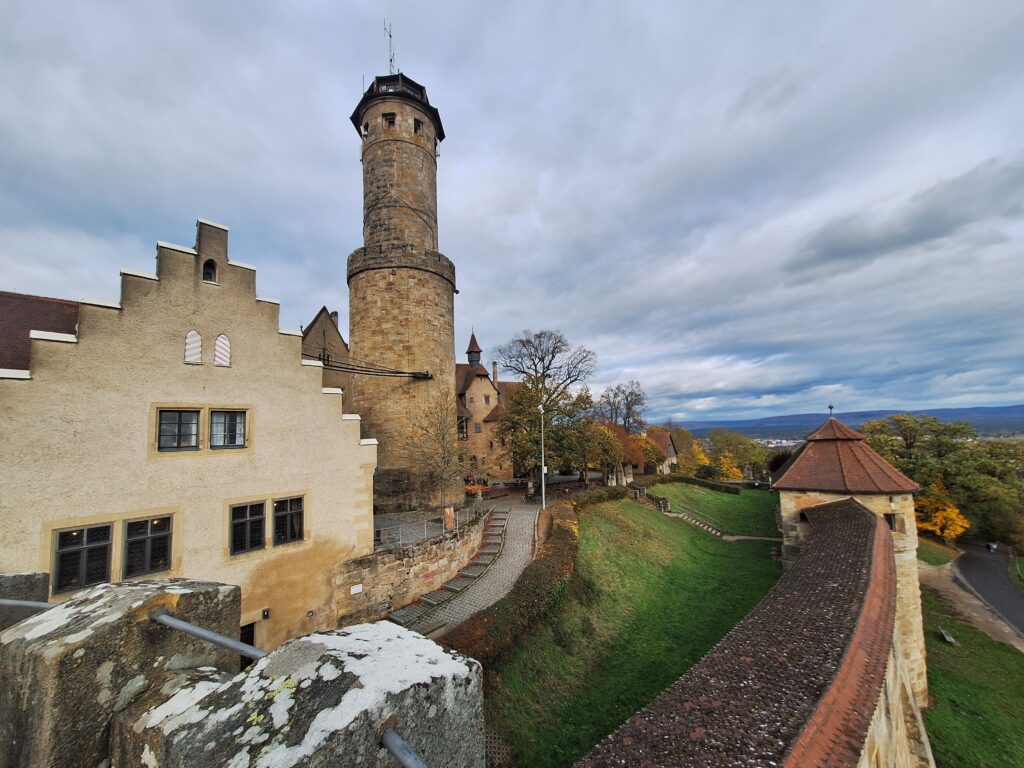
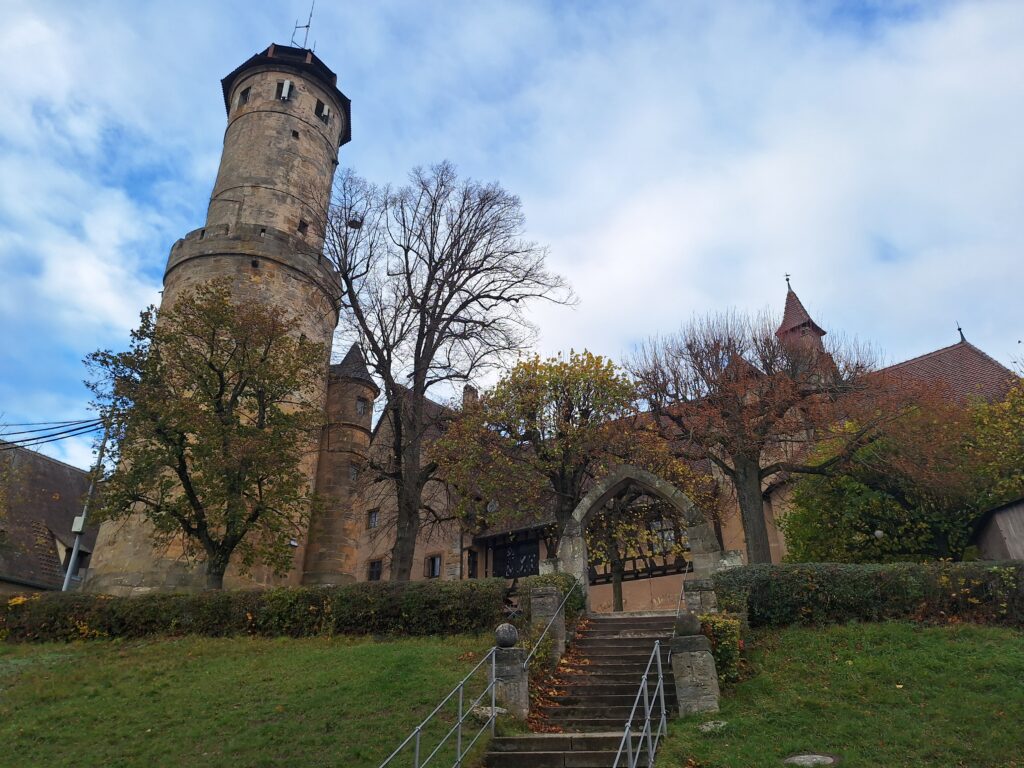
We must have walked around for 2 hours. There are so many variations on the joke that people from the United States are fascinated by European architecture (however reconstructed, which is not always obvious) and that same architecture is in the background figuratively and literally for the locals, but Altenburg had no misplaced fascination for us.
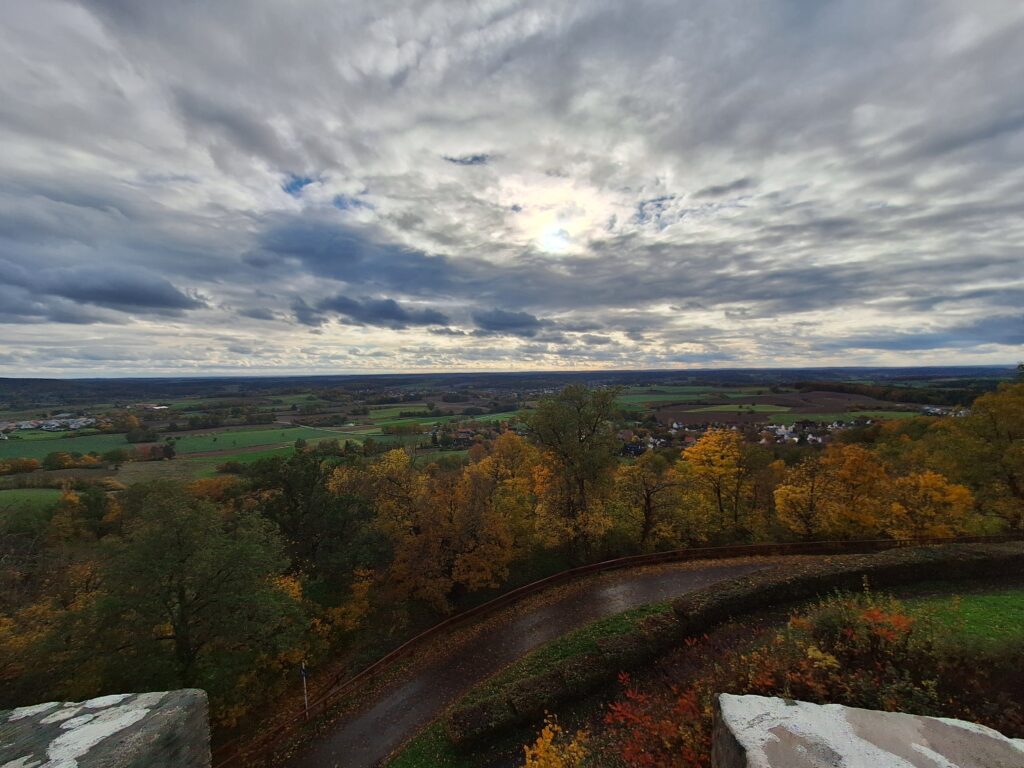
Okay one more wide-angle shot of the sky and autumn trees and the view down into the surrounding valleys and we can move on to the walk DOWN the hill, but not from whence we came.
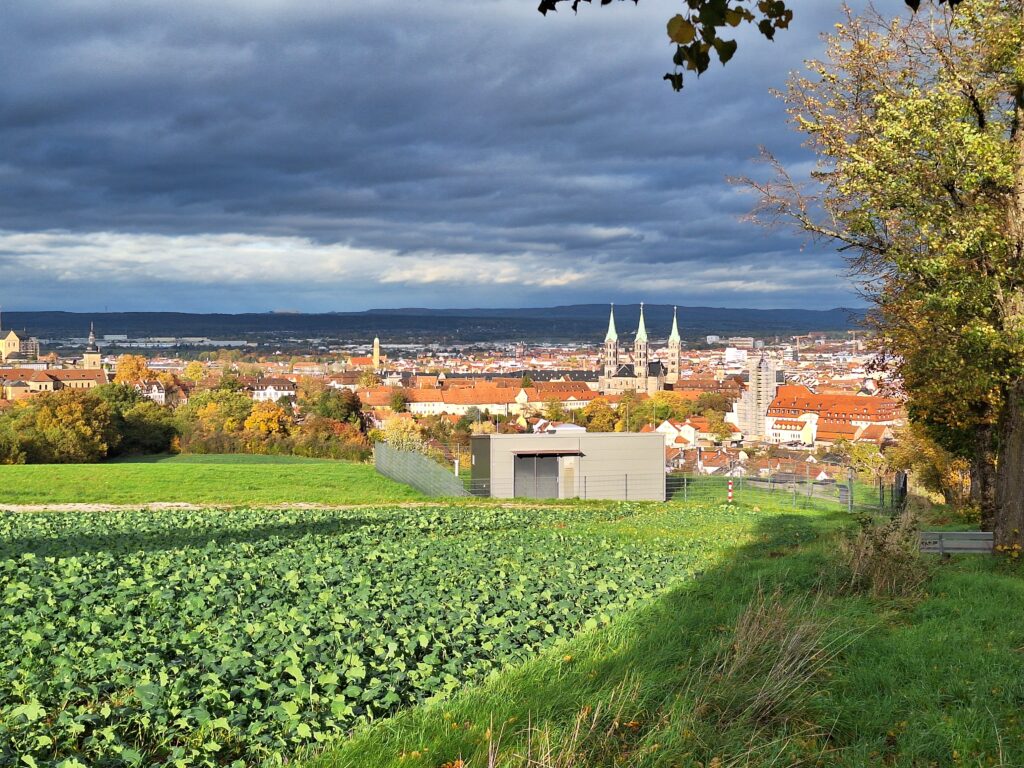
The walk down the hill was as rewarding as the walk up the hill, and not just for the declining slope. There are numerous churches of note in Bamberg, and from the road heading down (the way that cars go), the Bamberger Dom (cathedral) rise above everything else nearby.
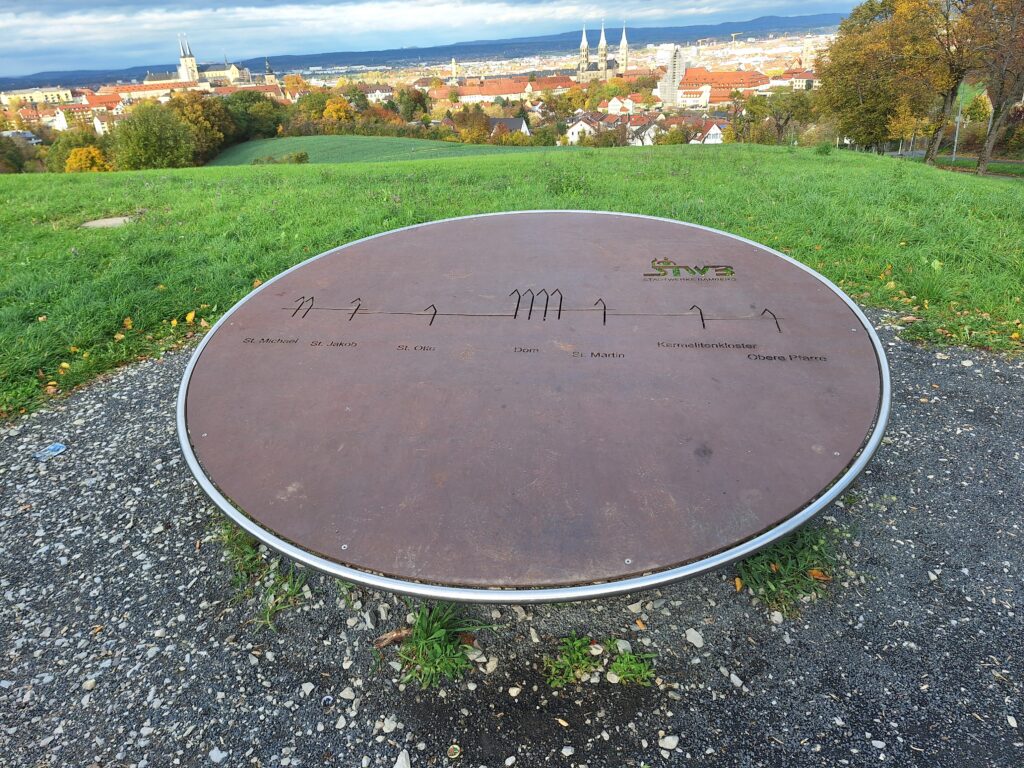
This incredibly useful diagram explains it, documented here as a wink and a nod to carefully concealed local enthusiasm.
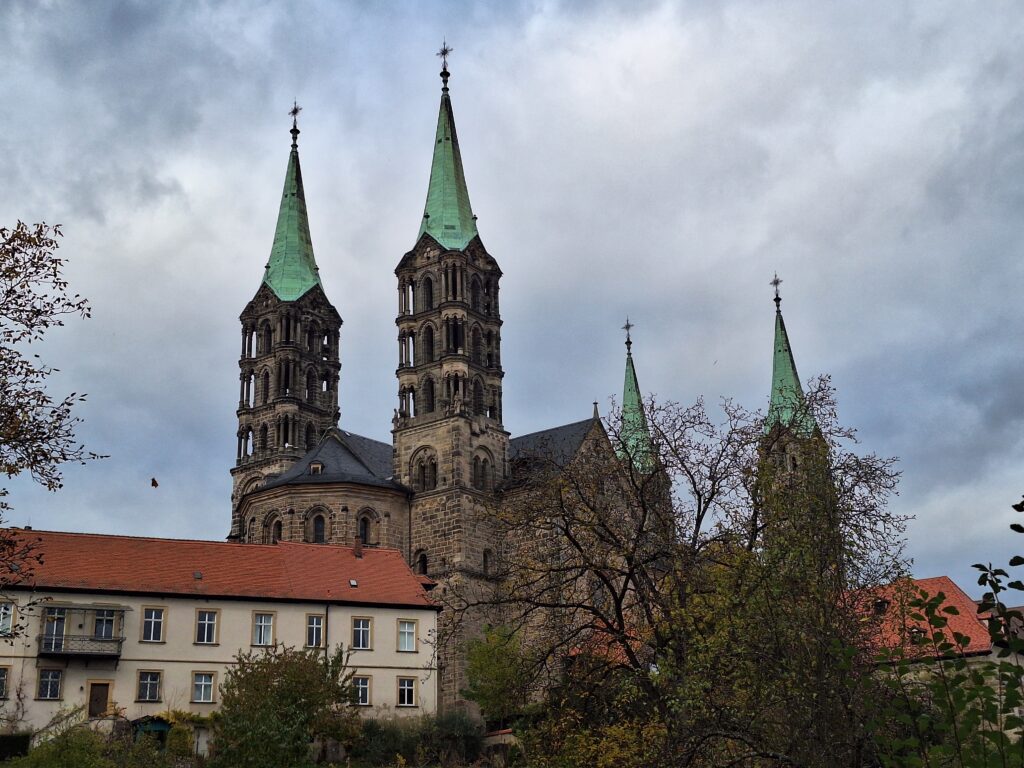
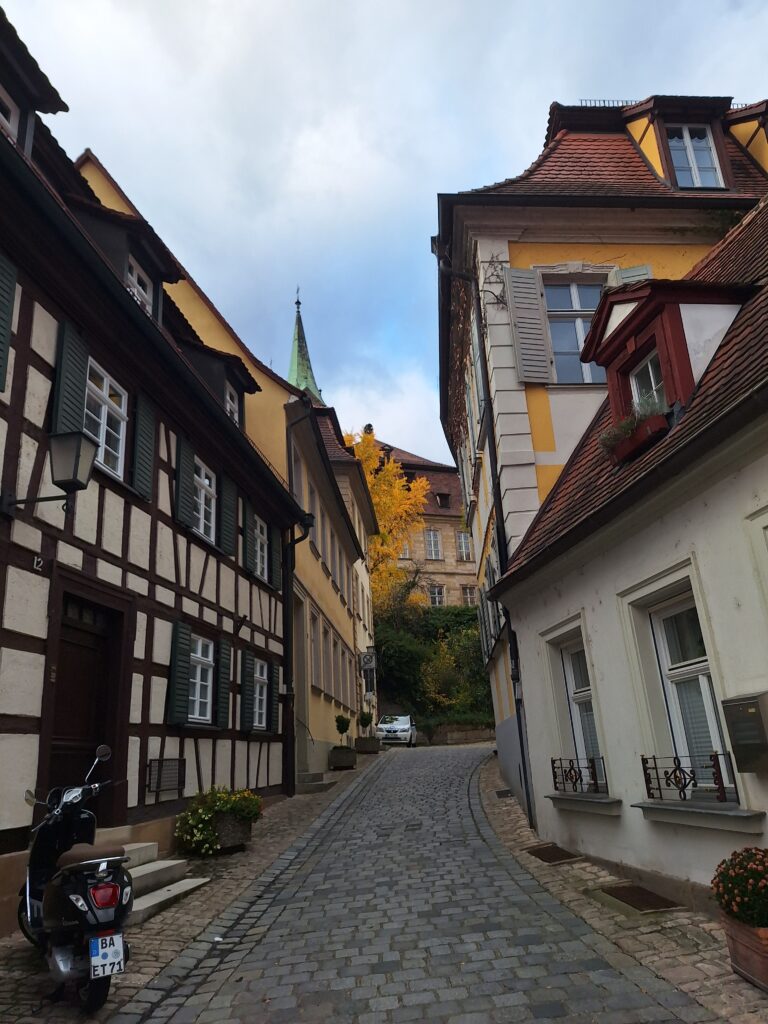
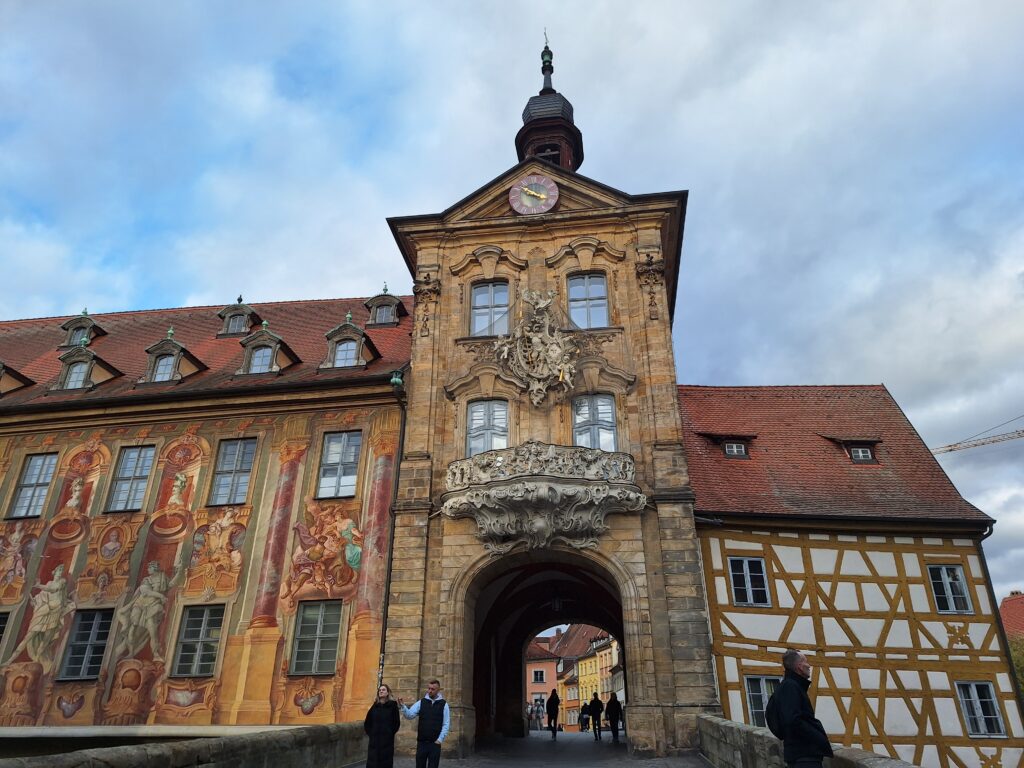
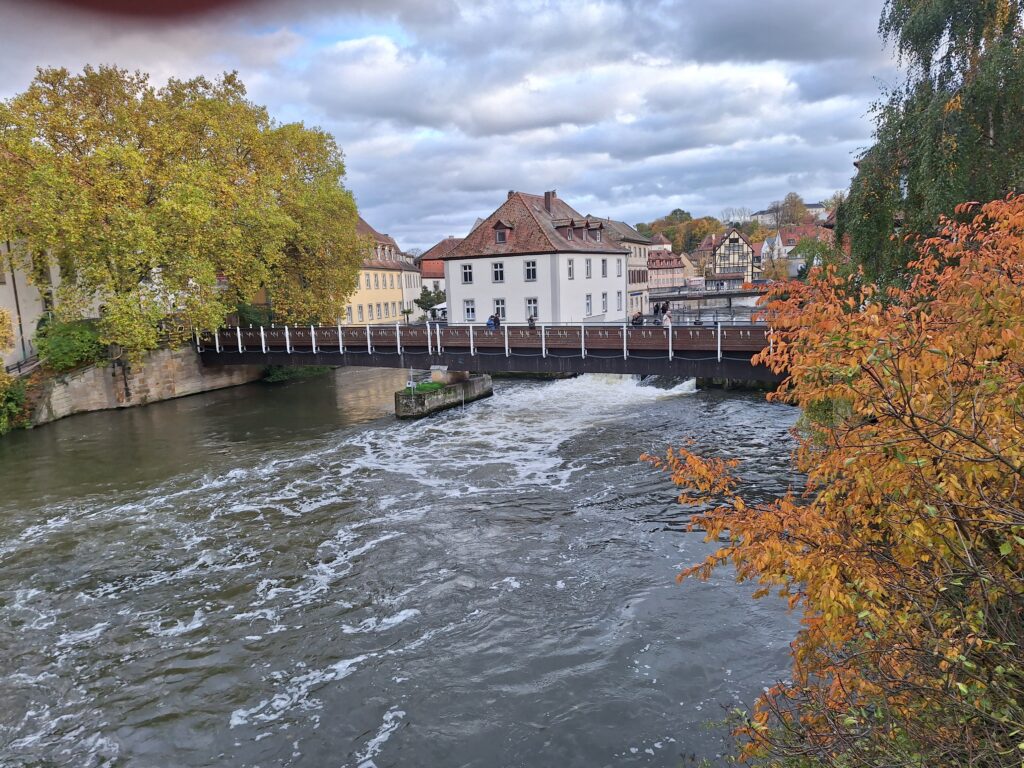
By the time we got down the hill back into Bamberg proper, it was a bit late to be bothering the nice folks who run the Dom, so we walked by, took pictures, promised ourselves to visit another time, and headed into the old town. At this point, my commentary gets a bit thin. We knew we were coming back, so from this point, it was more of a meander and less of a dedicated path to a destination.
Bamberg is such a pleasure to walk through. The Dom in particular holds a special place in my otherwise frozen heart. It’s hard to beat a work of gothic German architecture, but that’s a story for another blog post.
Comments are closed